Why FPCs are suitable for high frequency applications
May 21, 2022
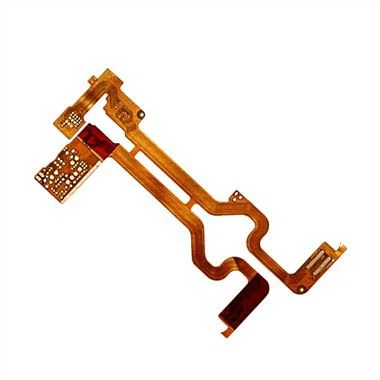
With the development of science and technology, the demand for printed circuit boards (PCBs) is increasing, the increase in broadband demand and the miniaturization of equipment have accelerated the application of PCB circuit boards. Correct selection of the type of PCB circuit board is the key to ensuring the integrity and reliability of system equipment. Of the three high frequency printed circuit board types, flexible printed circuit boards were found to be the best choice.
There are many factors that make flexible printed circuit boards ideal for high frequency applications:
Flex material:

High frequency applications require thin film circuit layers to be consistent for better application. Therefore, in the subsequent circuit board development process, various types of flexible polymer films have become indispensable materials in the development of PCB circuit boards. These films guarantee a thin and consistent flexible layer, making them the best choice for high frequency applications.
(1) Copper:
The same type of flexible circuit boards required in smart manufacturing processes differs from traditional rigid circuit boards, which is one of the main reasons why flexible printed circuit boards are suitable for high frequency applications. Copper, made from large ingots passed through a series of rolls, is very useful in the manufacture of flexible circuit boards. The rolling process also lengthens and anneals the copper, resulting in large copper grains. In flexible circuit board applications, the large grain size can make copper more suitable for this type of circuit board. Also, the copper will be attached to the flexible material by adhesive rather than brazing, which can easily break.
(2) Dielectric:
This is a laminating resin with good insulation and conductivity. The dielectric includes a ceramic filler that acts as an adhesive and is bonded to the copper foil of the flexible circuit board. Flexible printed circuit boards typically consist of epoxy or acrylic adhesives. At frequencies above 1gHz, the relative permittivity of both is high. This is why flexible materials are used for high frequency applications because of their high dielectric thickness.
Flexible printed circuit boards are the best type of circuit boards for high frequency applications.