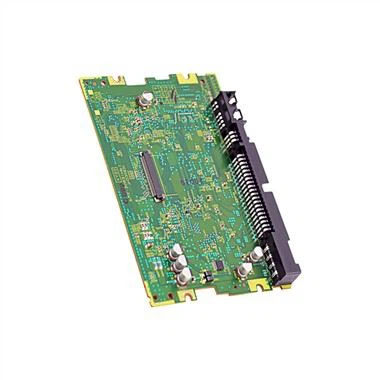
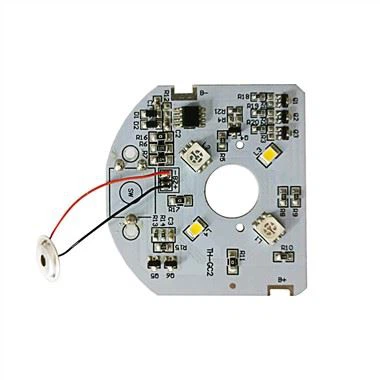
The key raw materials of circuit boards are different in the application of PCB and FPC substrate materials
Jun 27, 2022
The performance of printed circuit boards (PCBs) directly affects the performance of electronic products. Laminates made of polyimide resin can be used as printed circuit substrates, especially flexible printed circuit boards (FPC) made of PI film, which have the advantages of three-dimensional wiring, multi-layer arrangement, and large information storage capacity. Used in small electronic devices such as mobile phones.
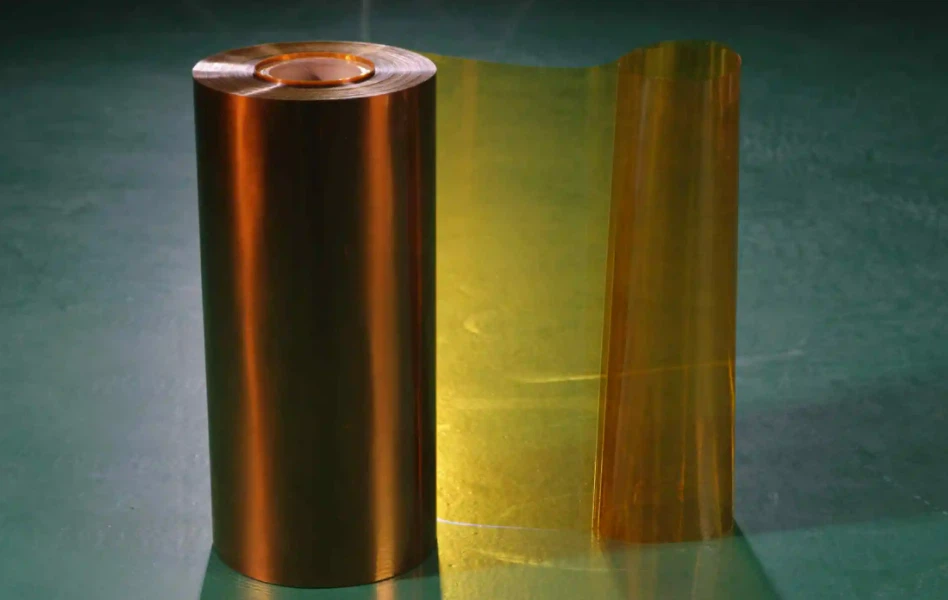
The application of H film in FPC is very large, and the annual growth is very fast. In the international market, FPC in the United States has accounted for about 9% of the entire PCB market, with an annual growth rate of about 15%. In the future, FPC will continue to increase at an annual growth rate of more than 20%. H films in Western Europe are mainly used as FPC substrates or insulation materials for motors; 60% of PI films consumed in electrical and electronic applications in Japan are used as FPE. Japan Zhongyuan Chemical Industry Co., Ltd. has developed H composite adhesive film HXEOTM , used for the preparation of flexible printed circuit substrates; domestic manufacturers have begun to develop two-layer boards made of polyimide and copper foil, whose heat resistance and bending resistance are better than three-layer boards, copper foil polyamide Flexible circuit boards made of imine film composites are replacing rigid circuit boards on a large scale.
The production of Pl film with porous surface can improve the bonding fastness between it and the copper coating. Researchers from Teijin Corporation of Japan proposed that the PA film obtained by casting on a smooth substrate was immersed in an alcohol solution with a carbon number of 1 to 6 such as ethanol. Then, the imidization reaction is carried out to obtain a porous PI film with excellent performance. Some researchers have invented a method of manufacturing FPC by placing a metal film on a photosensitive Pl film. In addition to improving the adhesion of organic siloxane-modified PI to inorganic materials such as glass and metal, Si-OH can self-condense to form a cross-linked structure under certain conditions, so that PI has a low coefficient of thermal expansion (CIE). . For example, Nippon Suso Co., Ltd. uses pyromellitic dianhydride, biphthalic dianhydride, diamine and methylaminophenyltrimethoxysilane to copolymerize, and the modified PI obtained has excellent adhesion and low CTE. Low CUE can make the CTE of the organic coating material closer to that of the inorganic base material, which is very important to improve the operational reliability of microelectronic devices. Its biggest feature is the heat resistance and flexibility of the solder bath. So far, there is no other material that combines these two advantages.
The biggest problem when PI resin is used in PCB is that its thermal expansion coefficient is much larger than that of electronic components. Due to this difference in expansion coefficient, there is a large internal stress in the product, and circuit peeling or cracking occurs, and even fracture occurs in severe cases. . The FPC currently used is first made of H film and copper foil, and then glued together with glue. The addition of adhesive has a great influence on its thermal properties, mechanical properties and electrical properties, so it can only be used in general electronic products and environments, but not suitable for aerospace, high-precision electronic products and high-temperature environments.
In order to avoid the negative effects caused by the adhesive, two methods are currently used to directly laminate the PI film and the copper foil:
The PI film is prepared first, and a layer of copper foil with uniform thickness is plated on it. However, the copper foil prepared by this method has poor mechanical properties and is difficult to be used as FPC.
The preparation of low thermal expansion PI makes it similar to the CTE of copper foil, which solves the key problem of direct lamination of PI film and copper foil: thermal stress. The prepolymer PA was directly coated on the copper foil, dried and imidized to obtain the glue-free FPC. It changes the traditional gluing method, avoids the defects of low heat resistance caused by the adhesive, and makes FIE have better heat resistance, mechanical and electrical properties. However, how to improve the fastness between the base material and the copper coating to ensure the accuracy of information transmission and prolong the life of the device is one of the research topics of PI film.