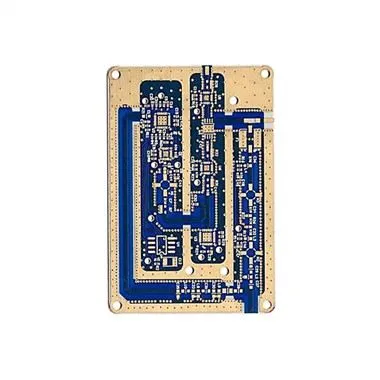
The Difference Between Ceramic Circuit Board And Metal Base Circuit Board
Jan 09, 2023
The difference between ceramic circuit board and metal base circuit board
According to the number of layers, circuit boards are divided into single and double-sided boards and multi-layer boards; ceramic circuit boards, copper substrates, aluminum substrates, epoxy resin circuit boards, etc. The metal substrate is generally made of a metal substrate such as a copper substrate or an aluminum substrate. The substrate of the ceramic circuit board is ceramic, so what is the difference between the ceramic circuit board and the metal substrate?

1. The composition and characteristics of metal-based circuit boards.
Consists of a metal base circuit board.
The metal-based circuit board is a composite printing made of a metal substrate, an insulating dielectric layer and a circuit copper layer.
Make the circuit board. The metal base is usually composed of insulating dielectric layers such as aluminum, iron, copper, invar copper, tungsten-molybdenum alloy, modified epoxy resin, polyphenylene ether, polyimide, etc. Like rigid flexible printed circuit boards, metal-based printed circuit boards can also be divided into single-sided, double-sided and multi-layer are special varieties of printed circuit boards.
In recent years, metal-based circuit boards have been widely used in the fields of communication power supplies, automobiles, motorcycles, motors, electrical appliances, and office automation.
Metal base circuit board features:
Compared with traditional printed circuit boards, metal-based circuit boards have certain thermal conductivity. For example, aluminum-based circuit boards have a thermal conductivity of 1.0W~2.0W and low cost; copper-based circuit boards have a thermal conductivity of about 300W-450W and are mainly used in automobiles. Headlights, taillights, and some equipment (drones), but copper is expensive and costly, but copper has strong thermal conductivity, but poor insulation, which requires insulation layer treatment.
2. Compare the advantages and characteristics of metal-based circuit boards and ceramic circuit boards.
Ceramic circuit boards use ceramic substrates as the substrate, and are generally processed by printing lines on alumina, aluminum nitride, and silicon nitride ceramic substrates. Ceramic circuit boards are divided into ceramic substrates, circuit layers and metal layers. The thermal conductivity of the ceramic circuit board is 15w~260w, which is ten to hundreds of times that of the aluminum substrate; the copper substrate has a high thermal conductivity of aluminum, but its insulation performance is not good and the price is expensive. Ceramic circuit boards have the advantages of high thermal conductivity and good insulation performance, and are good heat dissipation substrates and insulating substrates in many fields.
It can be seen that ceramic circuit boards have better thermal conductivity and insulation than metal-based circuit boards. Compared with aluminum-based circuit boards, the cost of ceramic circuit boards is higher, but the thermal conductivity cannot be compared with aluminum-based circuit boards; compared with copper-based circuit boards, the price of ceramic circuit boards is relatively low. Ceramic circuit boards not only have high thermal conductivity, but also Good insulation performance. For more ceramic circuit board production, please consult BETON Circuits, with more than ten years of industry experience and ceramic circuit board production experience, mainly engaged in various circuit boards, etc., with mature technology.