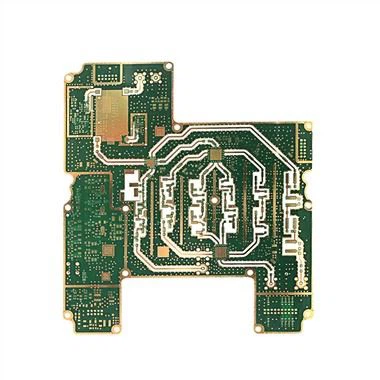
Why do PCB boards need impedance
Nov 04, 2022
What is impedance
In circuits with resistance, inductance, and capacitance, the resistance to alternating current is called impedance. Impedance is usually represented by Z, which is a complex number. The real part is called resistance, and the imaginary part is called reactance. The blocking effect of capacitance on alternating current in the circuit is called capacitive reactance, and the blocking effect of inductance on alternating current in the circuit is called For inductive reactance, the blocking effect of capacitance and inductance on alternating current in the circuit is collectively called reactance. The unit of impedance is ohms.
Impedance type
(1) Characteristic impedance
In electronic information products such as computers and wireless communications, the energy transmitted in the circuit of the PCB is a square wave signal (called pulse) composed of voltage and time, and the resistance it encounters is called the characteristic impedance.
(2) Differential impedance
The driving end inputs two identical signal waveforms with opposite polarities, which are respectively transmitted by two differential lines, and the two differential signals are subtracted at the receiving end. The differential impedance is the impedance Zdiff between the two wires.
(3) Odd-mode impedance
The impedance Zoo of one line to the ground in the two lines, the impedance value of the two lines is the same.
(4) Even mode impedance
The driving end inputs two identical signal waveforms with the same polarity, and the impedance Zcom when the two lines are connected together.
(5) Common mode impedance
The impedance Zoe of one line to the ground in the two lines, the impedance value of the two lines is the same, usually larger than the odd mode impedance.
Why do PCB boards need impedance?
The impedance of the pcb circuit board refers to the parameters of resistance and reactance, which hinder the alternating current. In the production of pcb circuit boards, impedance processing is essential. The reasons are as follows:
1. The PCB circuit (the bottom of the board) should consider the installation of electronic components, and consider the conductivity and signal transmission performance after plugging, so the lower the impedance, the better.
2. During the production process, the PCB circuit board has to go through the process of copper sinking, electroplating tin (or electroless plating, or thermal spray tin), connector soldering and other processes, and the materials used in these links must ensure that the resistivity is low to ensure that The overall impedance of the circuit board is low to meet the product quality requirements and can operate normally.
3. The tinning of the PCB circuit board is the most prone to problems in the production of the entire circuit board, and it is the key link that affects the impedance. The biggest defect of electroless tin plating layer is easy discoloration (easy to oxidize or deliquescence) and poor solderability, which will make the circuit board difficult to solder, and the impedance will be too high, resulting in poor electrical conductivity or unstable performance of the whole board.
4. There will be various signal transmissions in the conductors in the PCB circuit board. In order to improve the transmission rate, the frequency must be increased. If the line itself is different due to factors such as etching, stack thickness, and wire width, the impedance value will change. , so that the signal is distorted and the performance of the circuit board is degraded, so it is necessary to control the impedance value within a certain range.
The meaning of impedance for PCB circuit board
For the electronics industry, according to industry surveys, the most fatal weakness of electroless tin plating is easy discoloration (both easy to oxidize or deliquescence), poor solderability, which leads to difficult soldering, and high impedance, which leads to poor electrical conductivity or unstable performance of the entire board. , Easy to grow tin whiskers, resulting in a short circuit of the PCB circuit and even burn or fire.
Later, when the entire social production industry developed to a certain extent, many later participants tended to copy each other. In fact, a considerable number of enterprises themselves did not have the ability to develop or initiate innovation. Therefore, many products and their users' electronic products (circuit boards) were created. The main reason for the poor performance is the impedance problem, because when the unqualified electroless tin plating technology is in use, the tin plated on the PCB is actually It is not really pure tin (or pure metal), but a compound of tin (that is, it is not a metal at all, but a metal compound, oxide or halide, more directly a non-metallic substance) or tin A mixture of compound and tin metal element, but it is difficult to detect with the naked eye....
Because the main circuit of the PCB circuit board is copper foil, the tinned layer is on the solder joints of the copper foil, and the electronic components are welded on the tinned layer by solder paste (or solder wire). In fact, the solder paste is melting. The state soldered between the electronic components and the tin coating is metal tin (that is, a metal element with good electrical conductivity), so it can be briefly pointed out that the electronic components are connected to the copper foil at the bottom of the PCB through the tin coating, so the tin coating The purity of the instrument and its impedance are the key; but before the electronic components are connected, when we directly use the instrument to detect the impedance, in fact, the two ends of the instrument probe (or test lead) are also contacted by the copper foil surface on the bottom of the PCB. The tin plating layer is connected with the copper foil at the bottom of the PCB to connect the current. Therefore, the tin plating layer is the key, the key to affecting the impedance and the key to affecting the performance of the entire PCB, and the key that is easy to be ignored.
As we all know, except for the metal element, its compounds are poor conductors of electricity or even non-conductive (this is also the key to the existence of distribution capacity or transmission capacity in the circuit), so there is this kind of conductive but not conductive tin in the tin plating layer. When a compound or mixture is used, its ready-to-use resistivity or the resistivity and its corresponding impedance after electrolytic reaction due to oxidation and moisture in the future are quite high (sufficient to affect the level or signal transmission in digital circuits,) and its characteristics Impedances are also inconsistent. So it will affect the performance of the circuit board and the whole machine.
Therefore, as far as the current social production phenomenon is concerned, the material and properties of the coating on the bottom of the PCB are the main and most direct reasons that affect the characteristic impedance of the entire PCB, but also because of the fact that it has the effect of aging with the coating and electrolysis when exposed to moisture. Variation, so the troubling effect of its impedance becomes more insidious and variable. The main reasons for its concealment are: firstly, it cannot be seen by the naked eye (including its changes), and secondly, it cannot be measured constantly because it has Variability with time and environmental humidity changes, so it is always easy to be ignored.