What problems will occur in the PCB punching process
Aug 22, 2022
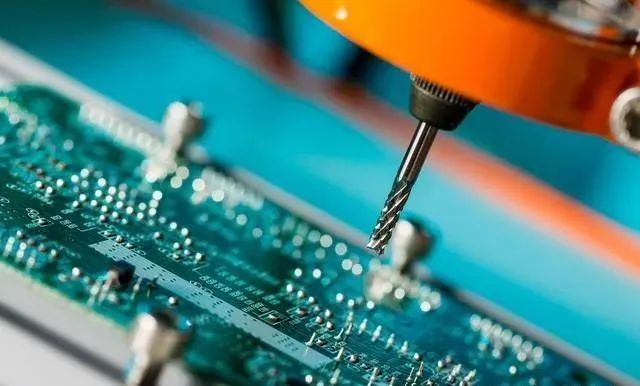
Punching is a relatively important process in PCB circuit board proofing, so what problems will occur in the PCB punching process? Let's take a look at the following.
1. Rough section
1.1 Causes:
(1) The punching gap between the concave and punch dies is too large; the cutting edge of the concave die is severely worn.
(2) The punching force of the punch is insufficient and unstable.
(3) The blanking performance of the sheet is poor.
1.2 Solutions:
(1) Select the appropriate punching and punching gaps.
(2) Repair the cutting edge of the die in time.
(3) Select the substrate with better punching performance and strictly control the preheating temperature and time according to the process requirements.
2. Holes and inter-cracks
2.1 Causes:
(1) The hole wall is too thin, and the radial extrusion force during punching exceeds the hole wall strength of the plate.
(2) The two adjacent holes are not punched out at the same time, and the hole punched after is squeezed because the hole wall is too thin.
2.2 Solutions:
(1) The hole spacing should be designed reasonably, and the hole wall should not be less than the thickness of the substrate.
(2) The adjacent holes should be punched out at the same time with a pair of molds.
3. The shape is bulging
3.1 Causes:
The mold design is unreasonable; the concave mold of the shape blanking is deformed, and bulging occurs at the long side.
3.2 Solutions:
(1) When the external dimension of the printed board is greater than 200mm, the die with the upper blanking structure should be used to punch the shape.
(2) Increase the wall thickness of the die, or select materials with sufficient bending and tensile strength to make the die.
4. Jump on the waste
4.1 Causes:
(1) The adhesion between the copper foil and the substrate is poor, and the copper foil on the scrap is easy to fall off when punching, and enters the punched hole when the punch exits the die.
(2) The gap between the die is too large, and the material leakage is not smooth. When the punch exits the die and discharges, the waste material jumps up.
(3) There is an inverted cone in the die hole, and the punching waste is difficult to fall, but jumps up when the punch exits the die.
4.2 Solutions:
(1) Strengthen the incoming inspection of substrate materials.
(2) Reduce the gap between the concave and convex dies and expand the leakage hole.
(3) Repair the inverted cone of the die hole in time.
5. Waste blockage
5.1 Causes:
(1) The cutting edge of the die is too high and the waste is accumulated too much.
(2) The concentricity between the leakage holes on the lower backing plate and the lower die base and the concave die holes is poor, and the butt joints of the holes are like steps.
(3) The leakage hole is too large, and the waste is easy to accumulate irregularly in the hole; it is also easy to block when two adjacent leakage holes are inscribed.
5.2 Solutions:
(1) Reduce the cutting edge of the die, which can reduce the number of wastes accumulated between 0.2mm.
(2) Adjust the vertical concentricity of the die, the lower backing plate and the leakage hole on the lower die base, and adjust the leakage on each part.
The hole is enlarged.
(3) When the two adjacent leaking holes are incised, in order not to block the leaking material, a waist round hole should be made, or a large hole should be made.