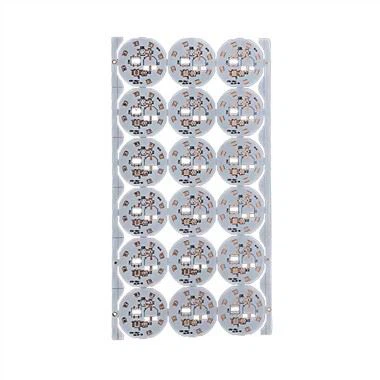
What is a high TG circuit board and what are its advantages
Nov 14, 2022
When the temperature of the high TG printed board increases to a certain area, the substrate will change from "glass state" to "rubber state", and the temperature at this time is called the glass transition temperature (TG) of the board. TG is the maximum temperature at which the substrate remains rigid. That is to say, ordinary PCB substrate materials will not only soften, deform, and melt at high temperatures, but also show a sharp decline in mechanical and electrical properties.
The general TG board is above 130 degrees, and the PCB printed board with TG ≥ 170 °C is usually called a high TG printed board.
The TG of the substrate is improved, and the heat resistance, moisture resistance, chemical resistance, stability resistance and other characteristics of the printed board will be improved and improved. The higher the TG value, the better the temperature resistance of the sheet, especially in the lead-free process, high TG applications are more common.
High TG refers to high heat resistance. Electronic products represented by computers are developing towards high functionality and high multi-layering, and require higher heat resistance of PCB substrate materials as an important guarantee. The emergence and development of high-density mounting technologies represented by SMT and CMT have made PCBs more and more inseparable from the support of high heat resistance of substrates in terms of small apertures, fine lines, and thinning.
Therefore, the difference between general FR-4 and high TG FR-4 is that in the hot state, especially when heated after moisture absorption, the mechanical strength, dimensional stability, adhesiveness, water absorption, thermal decomposition of the material There are differences in various conditions such as thermal expansion, high TG products are obviously better than ordinary PCB substrate materials.