The difference between ceramic circuit board and conventional PCB board
Oct 13, 2022
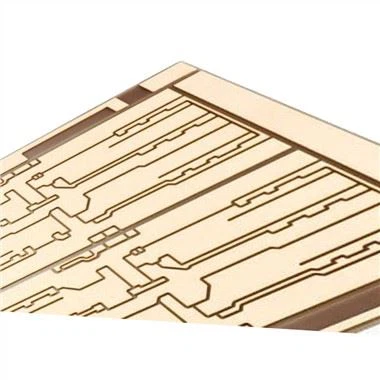
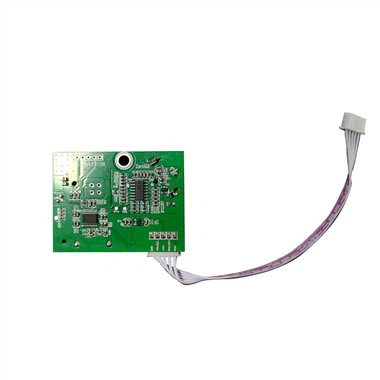
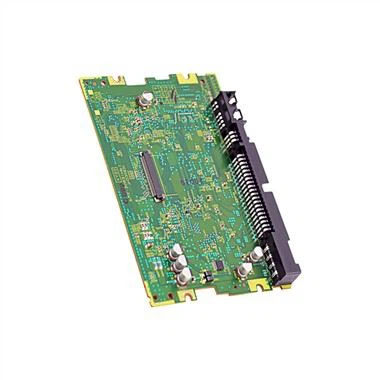
Compared with traditional printing circuit boards (PCB), ceramic circuit boards have many advantages. Because of its high thermal conductivity and minimum expansion coefficient (CTE), ceramic circuit boards have more functions, simpler functions and better performance compared to conventional PCB. Want to understand more information about ceramic PCB, and how they have a positive impact on the overall cost of your company? In this article, we cover all knowledge about ceramic PCB, various available types and their own use cases.
Advantages and disadvantages of ceramic PCB
Advantages: 1. Excellent thermal conductivity; 2. Resistance to chemical corrosion; 3. Compatible mechanical strength; 4. Easily realize high -density tracking; 5.CTA components compatibility
Disadvantages: 1. cost is higher than standard PCB; 2. Availability is reduced; 3. Fragile treatment
Type of ceramic PCB
High temperature
Maybe the most popular ceramic PCB type is high -temperature PCB. Designed for high -temperature ceramic circuit boards are usually called high -temperature co -burning ceramics (HTCC) circuits. These circuits are composed of adhesives, lubricants, solvents, plasticizers, and aluminum alumina to make raw ceramic.
Use produced primitive ceramic materials, then coat the material, and track circuit tracking on tungsten or molybdenum metal. After the implementation, the baking circuit is up to 48 hours between 1600 and 1700 degrees Celsius. All HTCC baking is performed in the gas environment, such as hydrogen.
Low temperature
Unlike HTCC, low -temperature co -burning ceramic PCB is made by mixing the crystal glass with the adhesive on the metal plate with the golden pulp. Then, before putting the circuit into a gaseous oven of about 900 degrees Celsius, cut the circuit and press the layer. Low -temperature co -burning ceramic PCB benefits less withdrawal and improved shrinkability. In other words, they have excellent mechanical strength and thermal conductivity compared to HTCC and other types of ceramic PCB. When using heat dissipation products such as LED lights, LTCC's heat dissipation advantage provides an advantage.
Thick film ceramics
The thick -membrane ceramic circuit includes gold and electronics pulp achieved on ceramic basic materials. Once implemented, bake the paste at 1,000 degrees Celsius or lower temperature. Due to the high cost of gold conductor slurry, this type of PCB is very popular among major printing circuit board manufacturers.
Compared with the traditional PCB, the main advantage of thick film ceramic materials is that thick membrane ceramics can prevent copper oxidation. Therefore, if the ceramic PCB manufacturer is worried about oxidation, it can benefit from the selection of thick -membrane ceramic circuits. Some people often ask us, "How many layers of ceramic PCB?" However, the answer depends on the type of ceramic PCB used. The minimum layer used in ceramic PCB is two layers, but according to the performance of the product, it may increase several layers. A width calculator tracking can help manufacturers understand their PCB design specifications.
Ceramic PCB usage case
Memory module
One of the key applications of ceramic PCB is related to the storage module. These PCB have memory integrated circuits and are usually used to produce DDR SDRAM and other computer components related to memory. All RAMs used in individual computers need to have a ceramic substrate PCB with an integrated memory module.
Receive and transmission module
Ceramic PCB makes the production of radar technology possible. WestingHouse is the first company to create launching and receiving modules with multi -layer ceramic PCB because they have high thermal and compatible CTEs. Unlike conventional PCB, ceramic circuits are the only circuit that can be used to create transmission modules.
Multi -layer interconnection board
One of the main selling points of ceramic PCB is that their capacity is greater than conventional circuit boards. In other words, compared with traditional PCB, ceramic PCB uses the same surface area to accommodate more components. Therefore, it has more potential applications using multi -layered ceramic PCB.
Simulation/Digital PCB
Various computing companies use low -temperature ceramic circuits (LTCC) boards to create advanced simulation and digital boards with excellent circuit tracking functions. Personal computer companies have used LTCC to create many lightweight circuits, thereby reducing the total weight of the product and minimizing the bruises.
Solar panels
Both HTCC and LTCC are used to make solar panels and other photovoltaic (PV) electrical panels. The photovoltaic panel uses multi -layer ceramic plate technology to ensure life and sufficient thermal conductivity.
Electric transmitter
Wireless power transmission and charging modules are becoming more and more common, becoming consumer electronics equipment. These devices are built with ceramic PCB technology due to their unique thermal performance and heat dissipation ceramic substrates.
The ceramic circuit board is used to generate electromagnetic fields, and the energy is transmitted between the receiver and the transmitter through the electromagnetic field. The inductive coil helps to transmit electricity from the original electromagnetic field and convert it into a current for the receiver circuit. Generally, the receiver circuit is made of ceramic base PCB material.
Semiconductor cooler
More and more electronic devices are becoming small. Behind the miniaturization of consumer electronics is semiconductor chips, and semiconductor chips are becoming smaller and smaller every year. Semiconductor chips use micro -manufacturing technology to achieve higher high -speed integration while maintaining the best tracking ability. Traditional PCB cannot meet the circuit functions required by modern semiconductor chips. However, the emergence of ceramic -based semiconductor circuits has led to excellent integration and performance between micro -circuit components. Therefore, ceramic PCB substrates are usually considered the future of semiconductor technology.
High -power LED
The ceramic substrate provides the best base for high -power LED lights. Unlike traditional PCB, ceramic circuit uses thick film technology to maximize thermal efficiency. As a result, the heat generated by LED lights (about 70 % of the calories of LEDs) does not affect the working efficiency of the circuit. In other words, only the ceramic circuit can provide the thermal efficiency level required for LED glow. When LED is built on ceramic circuits, no heat interface materials (also known as radiator). Therefore, if the manufacturer uses ceramic circuits, the materials needed to produce and maintain LED lights will be less.
Ceramic PCB type
Alumina
Also known as AL2O3 and metal base PCB. Alumina is a PCB type. It uses a diesel thermal conductivity and electrical insulation material between aluminum metals and copper layers. It is the preferred PCB involving heat dissipation and overall temperature maintenance and control. The aluminum structure is usually composed of three layers. A copper circuit layer of about 1 to 10 ounces. Thick, the insulation layer made of thermal conductivity and electrical insulation material, and the base layer made of copper or aluminum base. There are several types of aluminum PCB. There are flexible types, mixed types, multi -layers and pore types.
Ain
Ain, also known as aluminum nitride, is a new material and has been developed as a business -based product. In the past two decades, it has the characteristics of replication and controlling. Ain is an effective choice because it has good dielectric performance, low thermal expansion coefficient, high thermal conductivity, and non -reactivity to ordinary semiconductor craft chemicals. Aluminum nitride PCB is usually used for radiator, microwave equipment packaging, melting metal processing components, electronic packaging substrates, and semiconductor processing room fixed devices and insulators.