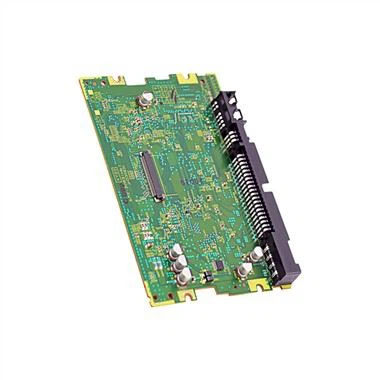
The Most Prominent Segment Of The PCB Industry: FPC
May 19, 2022
FPC (flexible circuit board) is a printed circuit board made of polyimide or polyester film and other bypass substrates. Compared with traditional PCB rigid boards, it has high wiring density, small size, light weight, and consistent installation. The advantages of flexible, foldable and bendable, three-dimensional assembly, etc., have obvious prominent points in product design and reliability design, which conform to the trend of intelligence, portability, and thinning in the downstream electronics industry. The fastest growing category in the subdivision products.
From 2009 to 2019, the compound growth rate of global FPC output value has been 6%, which is higher than the overall PCB industry growth rate of 4.1%, and currently accounts for about 20% of the PCB output value.

FPC is mainly used in display/touch modules, fingerprint recognition modules, camera modules, and terminal applications are concentrated in smart phones, automotive electronics, consumer electronics, VR/AR and other fields.
Smartphones are the biggest use of FPC, and have penetrated into antennas, buttons, batteries, LCD panels, camera modules, under-screen fingerprint modules, wireless charging modules and other links, and the number is gradually increasing. Take the FPC in the iPhone as an example. In the early iPhone 4, there were only 10, and in the iPhone XS, it has grown to 24.
In the field of automotive electronics, with the development of vehicle electrification and intelligence, the amount of FPC in the automotive field continues to increase, and the application scope covers related scenarios such as lights, display modules, power control systems, sensors, and advanced auxiliary systems.
In fact, the core difference between FPC and PCB in new energy vehicles is in the power battery wiring harness. As early as 2018, CATL and BYD have already applied FPC in batches in the pack link. Due to cost pressure and energy density requirements, FPC has the advantages of high integration, automated assembly, large-scale cost reduction, high efficiency, safety and reliability, and light weight. Therefore, the small revolution replacement of traditional copper wire harnesses is in progress.
Usually, the battery module usage of a new energy vehicle is between 6-16, and each module uses 1-2 FPCs. It is estimated that by 2025 and 2030, domestic new energy vehicles using FPC power battery solutions will Reach 8-9 million and 18-20 million.
In the field of VR/AR, the amount of FPC is increasing mainly due to the need for light weight and heat dissipation. Referring to smartphones, it is estimated that the amount of FPC per unit in AR/VR equipment may reach more than 10, and some high-end models may exceed 20.