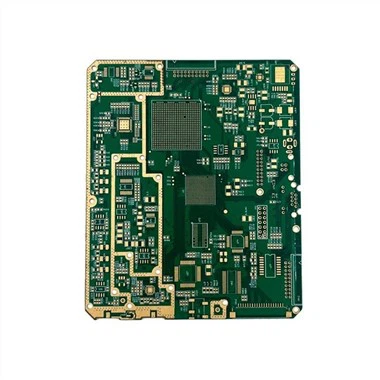
Ceramic PCB – The Future Of High-Performance Electronic Devices
Aug 22, 2023
In recent years, electronic devices have become an indispensable part of our daily lives. From mobile phones to laptops, from smart homes to electric vehicles, everything is powered by electronic devices. As electronic devices become more advanced and complex, the need for high-performance printed circuit boards (PCBs) is more important than ever. One solution that is gaining a lot of attention is the ceramic PCB.
Ceramic PCBs are made from a ceramic material, typically alumina or aluminum nitride, which offers many advantages over traditional PCBs made from materials such as FR-4 or polyimide. Ceramic PCBs offer superior thermal conductivity, which is important for dissipating heat from high-power components. This helps to increase the reliability of the electronic devices and ensures long-term stability. Ceramic PCBs also have a high dielectric constant, which provides better signal integrity and reduces interference.
Ceramic PCBs are ideal for applications such as power electronics, LED lighting, and automotive electronics. They are commonly used in LED light modules, where the high thermal conductivity of ceramic helps to keep the LEDs cool and maintain their brightness. Ceramic PCBs are also used in electric vehicles, where the high thermal conductivity ensures reliable operation of the power electronics.
Another advantage of ceramic PCBs is their ability to provide a high degree of customization. Ceramic PCBs can be produced with a wide range of shapes, sizes, and thicknesses, making them ideal for use in complex electronic devices. Ceramic PCBs can also be fabricated with a variety of surface finishes and plated through-holes to meet specific design requirements.
However, there are some challenges associated with ceramic PCBs. One major challenge is the cost, as ceramic PCBs are more expensive to manufacture than traditional PCBs. Another challenge is the brittleness of the ceramic material, which requires extra care during the manufacturing process to avoid damage to the PCB.
Despite these challenges, the advantages of ceramic PCBs make them an attractive choice for high-performance electronic devices. As technology continues to advance and the need for high-performance electronic devices increases, ceramic PCBs are likely to become more prevalent in the industry. With their superior thermal conductivity, high dielectric constant, and ability to be customized to meet specific design requirements, ceramic PCBs are the future of high-performance electronics.