What are the common forms and application scenarios of UHF RFID tags?
May 11, 2024
Due to the continuous deepening of people's understanding of RFID technology and the continuous reduction of application costs, RFID is accelerating its penetration in various industries. For example, the clothing industry, library book management, as well as airport logistics sorting, airline luggage tracking, etc., have all adopted RFID technology solutions. The most commonly used tags in RFID technology can be divided into several categories: low-frequency RFID tags, high-frequency RFID tags, and ultra-high frequency RFID electronic tags. Among them, ultra-high frequency RFID tags are widely used due to their advantages such as longer reading distance, strong security and confidentiality, ability to recognize high-speed moving objects, synchronous recognition of multiple objects, reusability, and large data memory.

Rich forms of label products in diversified application scenarios
Due to significant differences in demand and usage conditions among different industries and application scenarios, different requirements have been put forward for the performance and form of labels. This is mainly based on a balance between business requirements, process conditions, application costs, and application scenario environments. For example, if the identified object is a metal product, it is necessary to add absorbing materials to achieve anti metal properties.
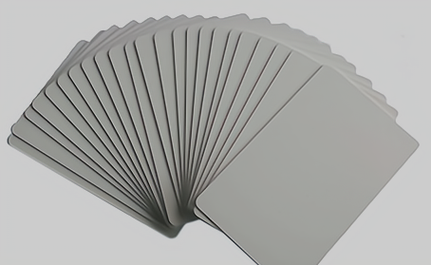
Electronic label products can be roughly divided into three categories in terms of form, namely traditional self-adhesive labels, injection molded labels, and card labels. Traditional RFID electronic tags with self-adhesive function encapsulate RFID in a self-adhesive form, suitable for applications in scenarios such as highways, parking lots, and automatic collection of product information on industrial production lines. In scenarios such as campus, transportation, and access control, non-contact IC cards are often used, and it is also easy to see shaped labels made by injection molding technology in access control.
In addition, due to differences in spectrum allocation among different countries and regions, the coverage of ultra-high frequency electronic tag frequency bands also varies, for example:
(1) The frequency bands in China are: 840-844MHz and 920-924MHz;
(2) The EU frequency band is: 865MHz~868MHz;
(3) The Japanese frequency band is between 952MHz and 954MHz;
(4) Hong Kong, Thailand, and Singapore: 920MHz~925MHz;
(5) The frequency bands for the United States, Canada, Puerto Rico, Mexico, and South America are 902MHz to 928MHz.
Common Applications and Label Forms of UHF RFID
(1) Footwear and apparel retail industry - Copperplate paper hang tag/woven label
Among the many application scenarios of RFID, the most common is the footwear and clothing industry, which is also one of the areas with the highest consumption of ultra-high frequency RFID tags.
The introduction of RFID technology in the footwear and clothing industry is a full process, from factories to warehouses, and then to retail terminals. Automated data collection can be carried out for various operational processes such as arrival inspection, warehousing, outbound, allocation, relocation, and inventory counting in clothing warehouses, ensuring the speed and accuracy of data input in warehouse management, and ensuring that enterprises timely and accurately grasp the real data of inventory, and reasonably maintain and control enterprise inventory. In the context of global sales layout, fashion fast-moving consumer goods have high requirements for product liquidity, and the use of RFID tags can greatly improve the efficiency of product circulation management.
(2) Ceramic electronic tags
Ceramic electronic tags are electronic tags based on ceramic material packaging, which have high electrical characteristics, high resistance, and are fragile and anti transfer. The electronic tag antenna on a ceramic substrate has low dielectric loss, good high flatness characteristics, stable antenna performance, and high sensitivity. Commonly used in logistics warehousing, intelligent parking, production line management, anti-counterfeiting detection and other fields.
(3) ABS label
ABS labels are common injection molded labels commonly used in logistics management scenarios. It can be installed on the surface of metal, walls, wooden products, and plastic products. Due to its strong protective function, the surface is resistant to high temperature and moisture, suitable for harsh working environments.
(4) Clothing washing - silicone label
Silicone labels use silicone encapsulation technology and are commonly used in the washing industry. Due to the softness and deformability of silicone, it has characteristics such as high temperature resistance and rubbing resistance, and is commonly used for inventory management of towels and clothing products.
(5) Tied label
Strap labels are generally packaged with PP+nylon materials, which have excellent characteristics such as easy installation and disassembly, waterproof, and high temperature resistance. They are commonly used in logistics tracking, food traceability, asset management, and other fields.
(6) Dripping PVC card labels
Cards made of PVC material can be customized for their appearance, giving them the appearance and texture of handicrafts. They also effectively protect the internal chips and antennas, making them easy to carry. Can be used for access control, item identification management, game chips, and other scenarios.
(7) PET label
PET, short for polyester film, is a type of polymer plastic film that is increasingly favored by consumers due to its excellent comprehensive performance. It can block ultraviolet rays, has good resistance to high and low temperatures, and has good resistance to creep. Due to the insufficient production capacity and technological level in our country to meet market demand, some still rely on imports, and PET labels are commonly used in jewelry management scenarios.
(8) PPS laundry label
PPS laundry tags are a common type of RFID tag in the linen washing industry, with similar shapes, sizes, and buttons, and strong high-temperature resistance. By using PPS laundry labels, washing management becomes more efficient and transparent.