Advantages and disadvantages analysis and application fields of ceramic circuit boards
Jan 07, 2023
Ceramic circuit board introduction
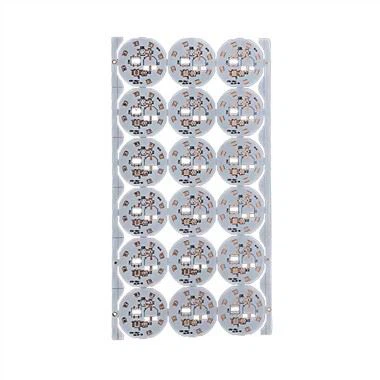
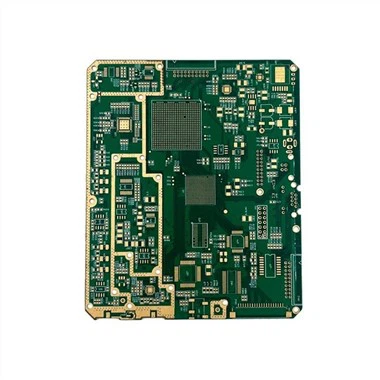
The ceramic circuit board is a kind of thermally conductive organic ceramic circuit board with a thermal conductivity of 9-20W/m.k prepared at a temperature below 250°C by using thermally conductive ceramic powder and an organic binder.
Why use ceramic circuit boards
Ceramic circuit boards are actually made of electronic ceramics and can be made into various shapes. Among them, the characteristics of high temperature resistance and high electrical insulation performance of ceramic circuit boards are the most prominent, and the advantages of low dielectric constant and dielectric loss, high thermal conductivity, good chemical stability, and similar thermal expansion coefficients to components are also very significant. The production of ceramic circuit boards will use LAM technology, that is, laser rapid activation metallization technology. Used in the field of LED, high-power power semiconductor modules, semiconductor refrigerators, electronic heaters, power control circuits, power hybrid circuits, intelligent power components, high-frequency switching power supplies, solid state relays, automotive electronics, communications, aerospace and military electronics components.
Advantages and disadvantages of ceramic circuit boards
1. Higher thermal conductivity
2. More matching coefficient of thermal expansion
3. Stronger and lower resistance metal film layer
4. The solderability of the substrate is good and the service temperature is high
5. Good insulation
6. Small high frequency loss
7. High-density assembly is possible
8. Does not contain organic components, is resistant to cosmic rays, has high reliability in aerospace and long service life
9. The copper layer does not contain an oxide layer and can be used for a long time in a reducing atmosphere.
Disadvantages of ceramic circuit boards
1. Fragile: This is the most important shortcoming. At present, only small-area circuit boards can be produced.
2. Expensive: There are more and more requirements and rules for electronic products. Ceramic circuit boards are only suitable for some relatively high-end products, and low-end products will not be used at all.
What are the advantages of ceramic circuit boards over PCB circuit boards
Ceramic circuit boards have higher thermal conductivity, better matching thermal expansion coefficient, stronger, lower resistance metal film layer, good solderability of the substrate, high operating temperature, good insulation, low high-frequency loss, and can be processed High-density assembly, no organic components, resistance to cosmic rays, high reliability in aerospace, and long service life.
The overall performance of ceramic circuit boards is better than FR-4 and aluminum substrates, and it is the best choice for LED lighting, sensors, photovoltaic inverters, solar cells and other fields.
Application fields of ceramic circuit boards

1. LED field
2. High power semiconductor module
3. Semiconductor cooler
4. Electronic heater
5. Power control circuit
6. Power mixing circuit
7. Intelligent power components
8. High frequency switching power supply
9. Solid state relay
10. Automotive electronics
11. Aerospace and military electronic components
12. Solar panel components