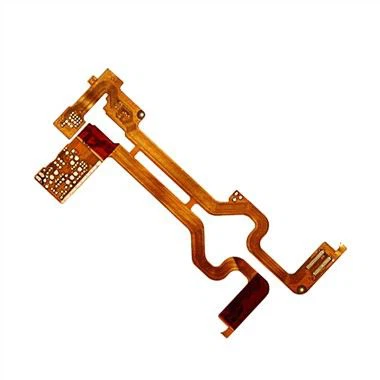
Factory Inspection Board
May 12, 2022
Today, the PCBs of Brazilian customers have been produced, and our quality inspectors are checking whether there are defective products.
This is the last process, and the defective products are picked out and packed. After the packaging is completed, you can contact the customer for delivery.
It will probably be shipped within 1-2 days.
Five PCB board inspection tips
1. The internal resistance of the PCB board test instrument should be large
When measuring the DC voltage of integrated circuit pins, a multimeter with an internal resistance greater than 20KΩ/V should be used, otherwise there will be a large measurement error for some pin voltages.
2. When testing the PCB board, pay attention to the heat dissipation of the power integrated circuit
The power integrated circuit should have good heat dissipation, and it is not allowed to work in a state of high power without a heat sink.
3, the detection of PCB board leads should be reasonable
If it is necessary to add peripheral components to replace the damaged part of the integrated circuit, small components should be selected, and the wiring should be reasonable to avoid unnecessary parasitic coupling, especially the grounding between the audio power amplifier integrated circuit and the preamplifier circuit should be handled well. end.
4. Check the PCB board to ensure the welding quality
When welding, it is indeed welded firmly, and the accumulation of solder and pores are easy to cause virtual welding. The welding time is generally not more than 3 seconds, and the power of the soldering iron is about 25W for the internal heat type. The soldered integrated circuits should be carefully checked. It is best to use an ohmmeter to measure whether there is a short circuit between the pins, and then turn on the power after confirming that there is no solder adhesion.
5. Do not easily judge the damage of the integrated circuit when testing the PCB board
Do not easily judge that the integrated circuit is damaged, because most integrated circuits are directly coupled. Once a certain circuit is abnormal, it may cause multiple voltage changes, and these changes are not necessarily caused by the damage of the integrated circuit. In addition, in some cases When the measured voltage of each pin is consistent with or close to the normal value, it does not necessarily mean that the integrated circuit is good. Because some soft faults do not cause changes in DC voltage.